
5 ways to spend summer in Scotland


Summer is in full bloom, most of us think of spending their vacation somewhere, where they could see beautiful places, engage in relaxing activities or just sit back and enjoy the moment. If you decided that this year you would like to spend your free time in Scotland, here are some ideas for what is there to do in the beautiful country:

1. Golf

Scotland is well known for it’s golfing background. If you are an enthusiast of the game, you might fancy spending you time visiting some of over four hundred golf courses – one of the oldest in the world, called links. Usually it is best to make a reservation but there is no problem with arriving unannounced. Scottish golf courses, even though some of them have their own membership policies, make a lot of exceptions for foreign tourists with only requirement being the payment between 5 and 20 GBP, depending on the field size.

Golf[photo by: Easywebsites.ky] Read the rest of this entry »

Tags: , , ,

Scottish Words


Haggis
Image via Wikipedia

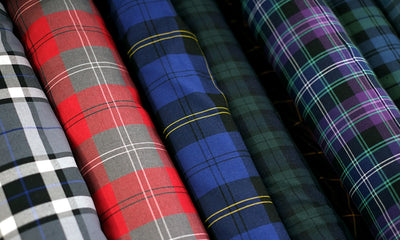
Scottish words have seeped into our language and added all the color and texture of a tartan plaid. In fact, tartan, which is cloth woven in colored checks and intersecting lines, is one of the many words of Scottish origin that is now recognized world wide.

Lassie, meaning a young unmarried woman, and its companion, laddie, a young man, have been popularized through television and song. Most people in Western cultures have heard the Scottish folk song,  “My Bonnie Lies Over the Ocean”. bonnie means pleasing to the eye.

Quite a few landforms owe their names to Scottish origins. Loch, the word for lake, has gained recognition through widely reported sightings of the legendary monster, Nessie. But words like glen, a secluded valley, and firth, an estuary, are also well recognized. Read the rest of this entry »

Tags: , ,

Recent Developments in the Mystery of the Loch Ness Monster


Loch Ness Monster, Seasnake, Seamonster, Seesc...
Image via Wikipedia

As early as the seventh century, rumors and reports of a prehistoric aquatic beast in the mysterious Loch Ness have brought many to visit this dark, deep lake in the Scottish highlands. But the mystery of the Loch Ness monster still remains something more than just legend, as sightings have continued for more than a century now. Take a look at some of the latest developments in this mystery over the last five years.

The one of the last documented observations of the Loch Ness Monster – or Nessie – occurred at October 15th 2005 at 6pm in the evening (we had also one more in 2009). A local park owner named Robbie Girvan was walking his dogs when he saw a long neck emerge from the water. Robbie ran back to grab his camera and managed to snap five photos of a “dark green and silvery” creature before it disappeared once again into the murky depths. Read the rest of this entry »

Tags: , , , ,

How to wear kilts? A few tips


DALBEATTIE, UNITED KINGDOM - MARCH 11:  Laura ...
Image by Getty Images via @daylife

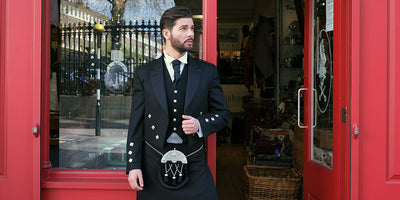
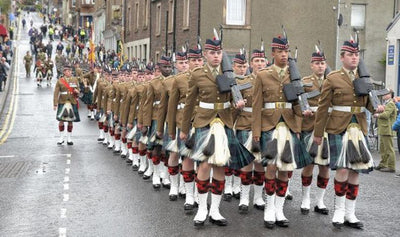
So you want to look manly in traditional Scottish garb? Well, now that you’ve found that perfect kilt or tartan, you should learn how to wear it properly. Here are some tips:

  • The pleated section of your kilt belongs in the rear, as it is primarily used to provide a nice bit of cushion for sitting on, and a kilt with pleats in the front is a telltale sign of someone who failed to put it on correctly.
  • After laying the pleats in the back, pull the under apron from right to left, passing its strap through the hole, and buckle it. The top apron should be loose now, ready for you to wrap it over your right hip from left to right, buckle and line up the top edges together.
  • Kilts are worn just under the rib cage and they are designed to hang to the top or middle of the knees, depending on where you want them. The straps allow for easy side-to-side adjustments, and again, remember that the double apron section should always be in front. Read the rest of this entry »

Tags: , , ,

4 Stereotypes about Scotsmen


Most people, when you ask them what do they know about Scotsmen, would answer that they imagine a tall, strong man with fiery red hair, dressed in kilt, standing on a cliff on a misty morning, playing his bagpipes, possibly with some sheep in the background. To be honest, the truth is not as romantic and in many cases completely different from what the world thinks of them. Here are some myths and stereotypes about Scottish people that are not entirely true:

Scotsmen are miserly and reserved because of the hardship their nation went through.

Nothing less true. What many consider avarice  is actually being practical. Even though it is often said that expenses are being cut in various fields, in all actuality the nation is developing at least as well as the rest of Great Britain, in some areas even better. Aside from that, on a more personal level, Scotsmen are very open and don’t hesitate to help others in need. Many immigrants praise the way they were welcomed by the natives when they arrived to Scotland.

[credit: amandabhslater]

Scottish dishes are inedible.

This is probably a myth that origins from the famous haggis, which, for many can be a bit overwhelming. But many well known, delicious dishes come from Scotland. Tattie scones, Dundee cake – which is known for its rich flavour – they all come from Scottish cuisine.

[credit: sicamp]

Scottish economy stands on… sheep.

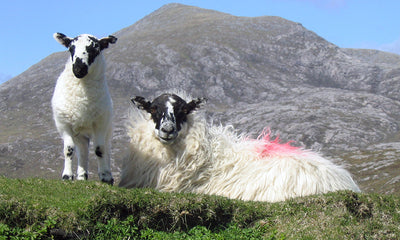
Yes, Scotland is known for its sheep. But in recent years sheep breeding business is shrinking rapidly – it is seven hundred thousand pieces smaller than it was seven years ago. Aside from that Scotland has a good coal mining base, oil extraction on the North Sea shelf, well developed metallurgical, mechanical, chemical and electrical industries.

[credit: foxypar4]

Men that wear kilts are always cold.

It is actually really difficult to feel cold in a kilt. For one, it is almost 23 feet of thick wool covering the area from waist to knees – that in itself is plenty to keep one warm. Aside from that, there are the woollen socks covering the lower legs – if anything, it can only be too warm. And that actually ties with another stereotype – that Scottish men don’t wear anything under their kilts. It probably depends on a person but sometimes, adding another layer could really be a bit much.

[credit: rfduck]

Tags: , , , ,

Scottish Cuisine: Haggis


Haggis is a traditional Scottish highland dish that resembles, in some senses, a rather rough sausage. It is the national dish of Scotland, and Robert Burns, the great Scots poet, who wrote the famous “Address to a Haggis” called the haggis the “chieftain o’ the puddin-race.” It is a staple of Scottish cuisine, and is served in the traditional manner, as well as in the “haggis supper” (deep fried haggis with a side of French fries) or even as a haggis burger. It is sold prepared in supermarkets year round. But what is actually in this mysterious and oft-misunderstood food?

Though the traditional response to the question “what is a haggis?” is often answered with a joke about a small highland animal with one pair of legs shorter than the other (to more easily circle the highland hills), the truth is that it is a food designed to let no part of the animal go to waste – hence its popularity amongst the poor in the days of Burns.

While it is sometimes made of deer, the haggis is more often based on sheep. It is a combination of oatmeal and several meats. Normally, the sheep’s “pluck” or offal is removed, including heart, liver, and lungs (or “lights”). This is ground, heavily spiced, and combined with onion, suet, spices, and salt. The oatmeal and the other ingredients are mixed with stock and stuffed inside a sheep’s stomach. This is the haggis, and it is then boiled and served. Of course, in modern times, a real stomach is just as often replaced with an artificial casing, and vegetarian-friendly ingredients may replace meat and offal.

Haggis is often served with “neeps and tatties” A “neep” is swede, or rutabaga, and is shortened from “Swedish turnip.” Tatties are mashed potatoes. Of course, haggis would not be complete without a “dram” of whisky to wash it down, a tradition referred to as “neeps and nips”.

Traditionally, haggis is served at Burns Suppers, on January 25 of each year. That these events, someone recites the “Address to a Haggis.” It is then doused with a shot of Scotch whisky and cut with a dirk, a large knife that is a traditional highland sidearm. Often, the haggis is paraded in with a bagpiper. Read the rest of this entry »

Tags: , ,

5 Interesting Facts About Highland Games


The caber toss event at the 2005 Pacific North...
Image via Wikipedia

Sports in the modern age come and go; the Highland Games in Scotland predate written history. They originate from the earliest Clan gatherings, not only for localities to show off their strongest and most athletic young men, but for Clan leaders to get a good look at the talent available for battle. Regarding the first and best of sport in Scotland:

1. The “Haggis Toss” is not a traditional Highland game. Indeed, tossing a haggis about is a criminal waste of food, so flying haggis at true Highland Games is right out.

2. The weight and dimensions of objects used at each Highland Games vary; today, as in the past, real stones and logs are used.

3. The pine logs used in caber tosses from year to year tend to dry out. Many cabers, then, are soaked for a time in water before the games, to attempt to add the lost weight.

4. Highland Dancing is a competition that demands strength, grace, and stamina. Originally, only men danced at the games, but in the late 19th century, Jenny Douglas entered the competition. Today, 95% of all Highland Games dancers are women. Read the rest of this entry »

Tags: , ,

A Guide To The Scottish Highlands For Tourists


The steep south face of Ben Nevis from Sgurr a...
Image via Wikipedia

The Scottish Highlands is a term given to the mountainous areas of Scotland that are to the west and the north of the Highland Boundary Fault. This region is the perfect holiday destination for tourists looking for a relaxed holiday or an action packed adventure. The area features dramatically different landscapes, making it the habitat for various plant and animal species. The Scottish Highlands are especially steeped in culture and traditions that spring forth from its unique history.

The Highlands are particularly famous for their natural attractions and offer visitors a wide range of stunning views. Ben Nevis, the tallest peak in the British Isles is located in this area. From gorges to peculiar rocky features, ancient woodlands and even some beaches, the landscape of the Scottish Highlands has a little bit of everything. Visitors to this region are especially advised to visit the Corrieshalloch Gorge, the Falls of Glomach in Kintail and the curiously stacked rock feature known as the Old Man of Storr. To admire the beautiful forests and woodlands, one must visit Speyside which is home to the pinewood, or make a trip to Ardnamurchan which features a temperate rainforest.

The best time to visit this wonderful location is either in spring or early summer. During this season, tourists can indulge in various activities from hill-walking to golfing, fishing, cruising, orienteering, and water sports or even shooting. For tourists who would prefer a more leisurely holiday, the Highlands have excellent country house hotels and hideaways as well as a number of spas. Read the rest of this entry »

Tags: , , ,

2 Famous Scottish Writers


Scottish literature dates back to well before the medieval ages, and there have been plenty of prolific writers throughout the centuries.

Robert Burns * Source: Image:Robert burns.

Image via Wikipedia

Many Scottish writers produced works in English in addition to the native languages such as Scottish Gaelic and Scots.

Each era was defined by different writing styles that were influenced by a few talented authors. Overall, Scotland’s most famous writers are from the 18th and 19th century periods. Robert Burns and Robert Louis Balfour Stevenson are some of the most recognizable names in Scottish literature.

Born in the small village of Alloway, Robert Burns has risen to iconic status in Scotland and beyond. You may

be surprised to learn that one of Scotland’s most famous writers actually wrote poems rather than novels. Burns also had musical creativity, and he integrated traditional folk songs into his poems. For example, his poem “Auld Lang Syne” has been carefully written to match the musical notes of an old folk song. Written in 1788 in the Scots language, this melodic poem has become part of a New Year’s tradition in Scotland, the United Kingdom, and other countries where English is spoken. Read the rest of this entry »

Tags: , , ,

Let’s Talk Whisky!


Since the beginnings of Scotch Whisky a long time has passed and it evolved into what could easily be named queen of beverages. It is the best selling alcoholic drink in the world and not without reason. Since the first mention of whisky in 1494 (oddly enough, found in notes of Inland Revenue), distillers had the time needed to perfect brewing procedures.

Scotch Whisky

One of the things that are not common knowledge is that whisky is actually colourless in the beginning. It only gains its rich colour after either seasoning in sherry casks or adding caramel, that is supposedly not influencing the taste. While tasting of whisky, its age and the cask it’s been brewed in. You can know an aged whisky by thin trickles slowly making their way down the sides of the glass. Read the rest of this entry »

Tags: , ,